
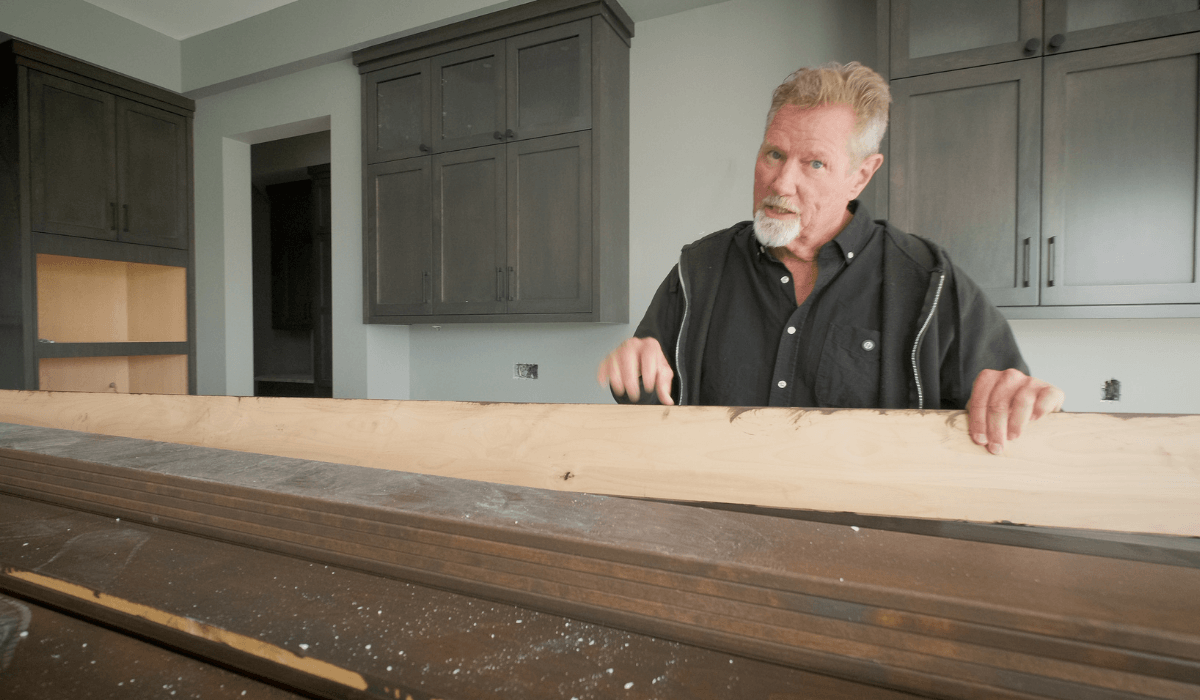
Walk through most new-build show homes in Calgary and you'll see the same trim package: bright white, perfectly straight, and, more often than not, made from MDF. It looks good on move-in day. The problem is what it is, what it's made with, and what it looks like five, ten, or twenty years later.
At RAVN Homes, we use solid wood for our baseboards and casings, not MDF. It's a deliberate choice, and once you understand what each material actually is, it's not a close call. MDF has a couple of narrow advantages for builders trying to hit a price point but, we don’t maximize for margins, we maximize for the quality of your home.
Here’s an honest look at both, including where MDF does “hold up”, so you can see exactly why we build with wood instead.
What Is MDF, and Why Do Most Builders Use It?
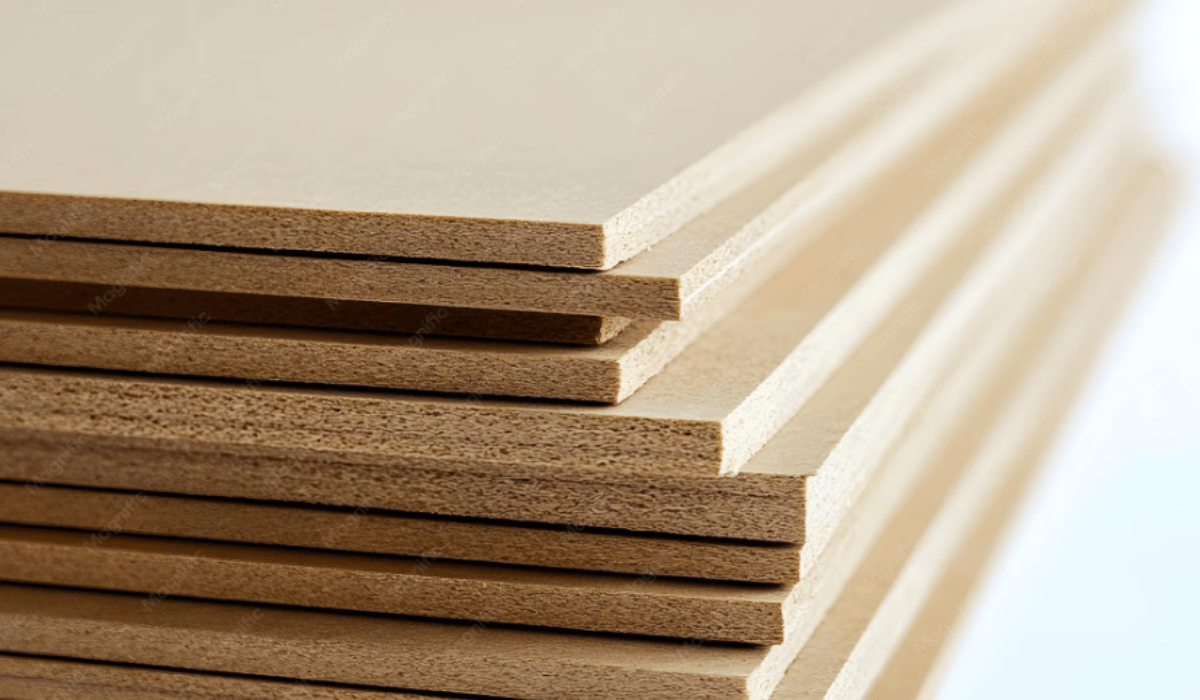
MDF (medium-density fibreboard) is an engineered product made by breaking wood down into fine fibres and binding them together with resin under heat and pressure. It's not really "wood" in any meaningful sense once it's gone through that process; it's compressed fibre held together with glue.
Where MDF genuinely wins:
- Cost. MDF is significantly cheaper than solid wood, especially at scale. This is the real reason it's the default in production and spec-built homes; it's a cost decision, not a quality decision.
- A uniform, factory-smooth paint finish. With no grain or knots to contend with, MDF is easy to paint to a flat, machine-like uniformity. If your goal is trim that looks identical everywhere and shows zero natural character, MDF achieves that.
That's really the whole list. Everything else about MDF is a compromise you're making in exchange for that lower price tag.
Where MDF falls short, and why it matters:
- Off-gassing and indoor air quality. This is the big one. MDF is held together with resin adhesives (historically urea-formaldehyde), and it off-gasses volatile organic compounds (VOCs) into your home's air, most noticeably when the product is new. Lower-emission MDF (CARB2/EPA TSCA Title VI compliant) has reduced this, but "lower-emission" is not "emission-free": it's still a manufactured, resin-bonded product in a home you and your family breathe in every day. Solid wood has no added resin binder and nothing to off-gas.
- Moisture destroys it, permanently. MDF is essentially compressed sawdust and glue. If it gets wet (a slow plumbing leak, a humidifier running too high, a spill that sits too long) it swells, crumbles, and does not recover. It has to be torn out and replaced. Solid wood can typically be dried and refinished.
- It dents, chips, and can't be repaired. A vacuum cleaner or a moving box corner will dent MDF baseboards, and because there's no grain structure holding it together, chips expose a soft, fibrous edge that's difficult to disguise and impossible to sand back to life.
- It reads as builder-grade. Buyers, agents, and appraisers increasingly recognize painted MDF trim as a cost-cutting signal in a home, not a quality one.
- It simply doesn't last. MDF is a fine short-to-medium-term product for a home meant to be sold and moved on from. It is not a material built for a family that plans to live in a home hard for twenty or thirty years.
What About Solid Wood?
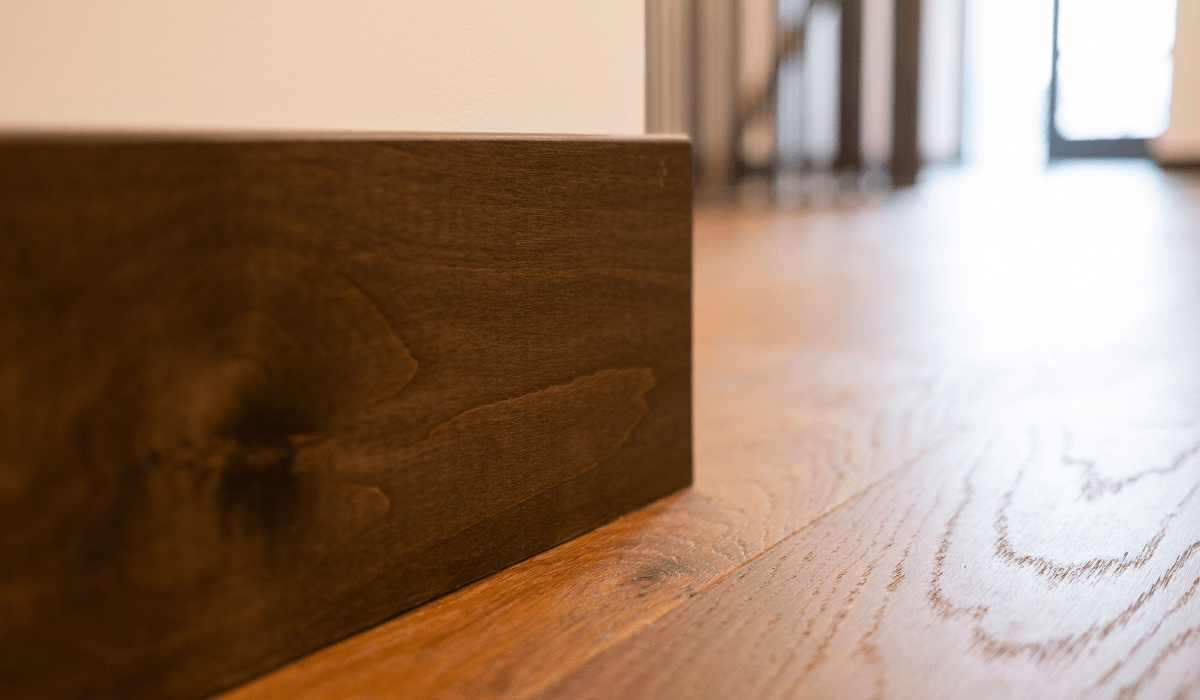
We use solid wood for our baseboards and casings, a genuine hardwood, not a manufactured substitute, with a warm tone, tight and attractive grain, and character that no engineered product can replicate.
Why it's simply the better material:
- A healthier home. This is the difference that matters most and gets talked about least. Solid wood is a natural material with no added resin binder; there's nothing in it to off-gas. Choosing wood over MDF means choosing not to introduce another source of manufactured VOCs into the air your family breathes every day, in every room, for as long as you live there.
- Real durability. Solid wood shrugs off impact, moisture, and decades of daily wear in a way an engineered board never will. It doesn't crumble when it gets wet, and dents can often be steamed or sanded out rather than requiring replacement.
- It's repairable, not disposable. Scratches, dings, and even water exposure can be sanded, refinished, and brought back to like-new condition. MDF can't do this; once it's damaged, it's landfill.
- Character and warmth that can't be faked. Natural grain and knot pattern read as intentional, warm, and high-end - the opposite of the flat, sterile uniformity of painted MDF. It's part of what makes a custom home feel custom.
- A stronger long-term and resale story. Solid wood millwork is still recognized by buyers and appraisers as a genuine quality signal, reinforcing throughout the home that it was actually built well, not just finished to look that way on possession day.
The one real trade-off:
- Cost. Solid wood costs more than MDF up front, and that's the honest reason most production builders default to MDF instead. It's a real line-item difference, and it's the only real argument in MDF's favour. Everything else - health, durability, repairability, longevity, and how the finished home actually feels - favours wood. Given how much more time you'll spend living with this material, we think it's the right place to spend a little more.
Why RAVN Chooses Wood:
We build homes meant to be lived in hard, for decades, by real families; not staged and sold.
When the choice is between a manufactured board bonded with resin that off-gasses into your home and crumbles the first time it meets water, and a genuine hardwood that's healthier to live with, harder to damage, and can actually be repaired instead of replaced, that's not a hard call for us. It's not really a close one at all; MDF just happens to be cheaper, and that's the only thing it has going for it.
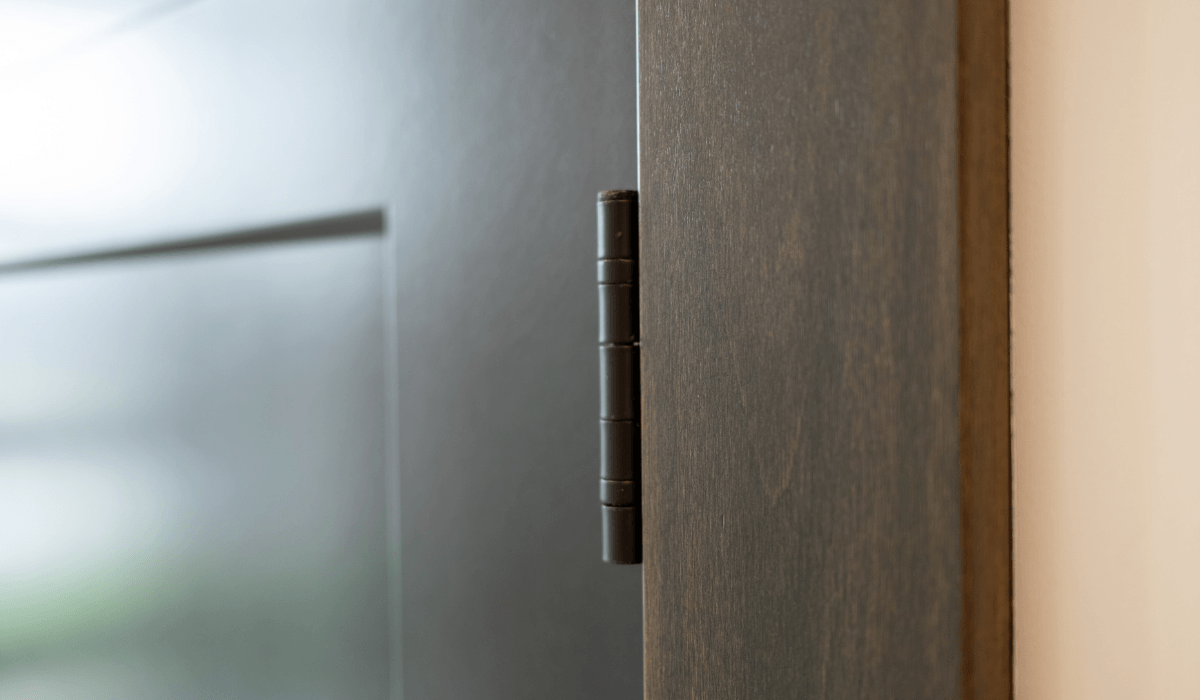
Wood baseboards and casings are one of dozens of decisions like this throughout a RAVN build, alongside things like L/480 floor deflection instead of the builder-standard L/240, fir plywood subfloors instead of OSB, and 8-ft solid interior doors on ball-bearing hinges.
That's the difference between building to sell and Built To Be Remembered.