
If you've spent any time researching Lakewood in Strathmore, you've probably come across the rumour that the subdivision is built on a swamp. It's a story that's been floating around for a while, and honestly, I get why people ask. There's history to this land; the town once used the area as a water reservoir, and any time water and land values are mentioned in the same breath, people get nervous.
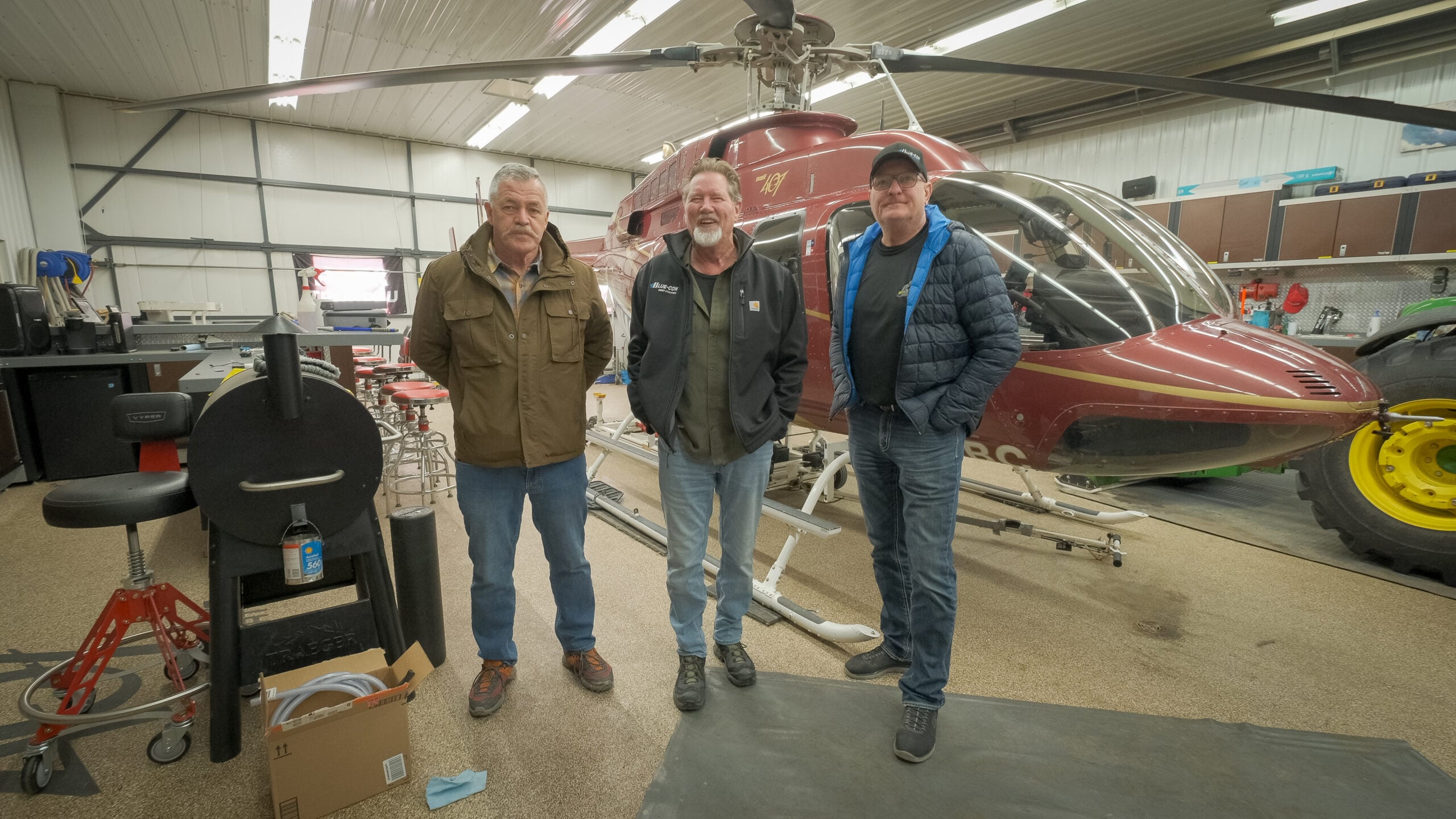
So, we sat down with two of the most qualified people I know to answer the question properly: Bernie Burchill from Contour Earthmoving (the grading contractor) and Matt Hassen from Blue-Con (the deep services contractor). These are the men who physically work the ground at Lakewood – putting in the deep services or working the landscape.
They're digging the dirt, reading the soil, and building the infrastructure that a subdivision like this stands on.
Here's what they told us.
Yes, the Town Stored Water Here. But That's Not the Whole Story
At one time, the town of Strathmore held water on this land as part of its water treatment system. That's true. And that single fact seems to be the origin of the swamp rumour.
But here's what that fact leaves out: every piece of land that becomes a subdivision goes through an intensive engineering and preparation process before a single home is ever built. The fact that water was once stored somewhere doesn't mean a house is going to sink. It means that the engineers, along with the developer, had to do their diligence, and they did.
What Actually Happens Before Anyone Builds on a Piece of Land
Before Bernie or Matt even shows up on site, there's a significant investment in engineering. A geodetic study maps out every high point and low point across the land. Engineers design where roads go, where lots sit, what elevation everything needs to be at, and how water will be managed across the entire site. By the time a grading contractor arrives, there's already a detailed plan in place.
Then Bernie's crew shows up. Here's what that process looks like:
Step 1: Strip and Grade
The first thing Bernie's team does is strip the topsoil (the black dirt) off the entire site. It gets stockpiled so it can be screened and put back on the lots later. Then surveyors stake everything out and identify where they need to cut and where they need to fill.
High spots get cut down. Low spots get filled in. If a low area has been sitting with water in it, they excavate it deeper, remove the compromised material, and start fresh. Every layer of fill that goes back in is tested with a densometer, a device that measures whether the soil has been compacted to the required density. If it doesn't pass, they don't move on.
Bernie put it simply: this is no different from any subdivision in Calgary, Chestermere, or anywhere in the surrounding area. The dirt, the topography, and the process are the same.
Step 2: Deep Services
Once Bernie's work is done, Matt's crew comes in, and as Matt jokes, he makes a mess of everything Bernie just finished.
Deep services means digging the trenches for sanitary sewer, storm sewer, and water lines. At Lakewood, that's meant digging up to 20 feet down in some phases, and up to 30 feet in others. And what have they found down there?
Rock.
Not swamp. Rock. Shale formations that the excavator has to rip through with a special attachment. The kind of soil profile you'd expect from this region of Alberta, not the soft, saturated ground that a swamp rumour implies.

Just like with Bernie's work, every trench that gets backfilled is done in layers, tested by an independent party with a densometer, and compacted to spec. It's a closely regulated process with checks at every stage.
What About Water in the Ground?
Matt raised an important point that's worth understanding: perched water.
In Alberta soils, it's common to find a layer of clay above a layer of rock.
Water that travels down through the soil hits the rock layer and can't go any further, so it pools there. If you dig down and hit that layer, it might look alarming.
But that water is sitting well below any foundation depth. It's not a structural concern; it's just how prairie geology works.
The gravel that's bedded around all underground pipes at Lakewood acts like a giant weeping tile system. Over time, moisture in the surrounding soil finds its way into that gravel, which is exactly what it's designed to do. It moves water away from where it doesn't belong.
The Storm Management System
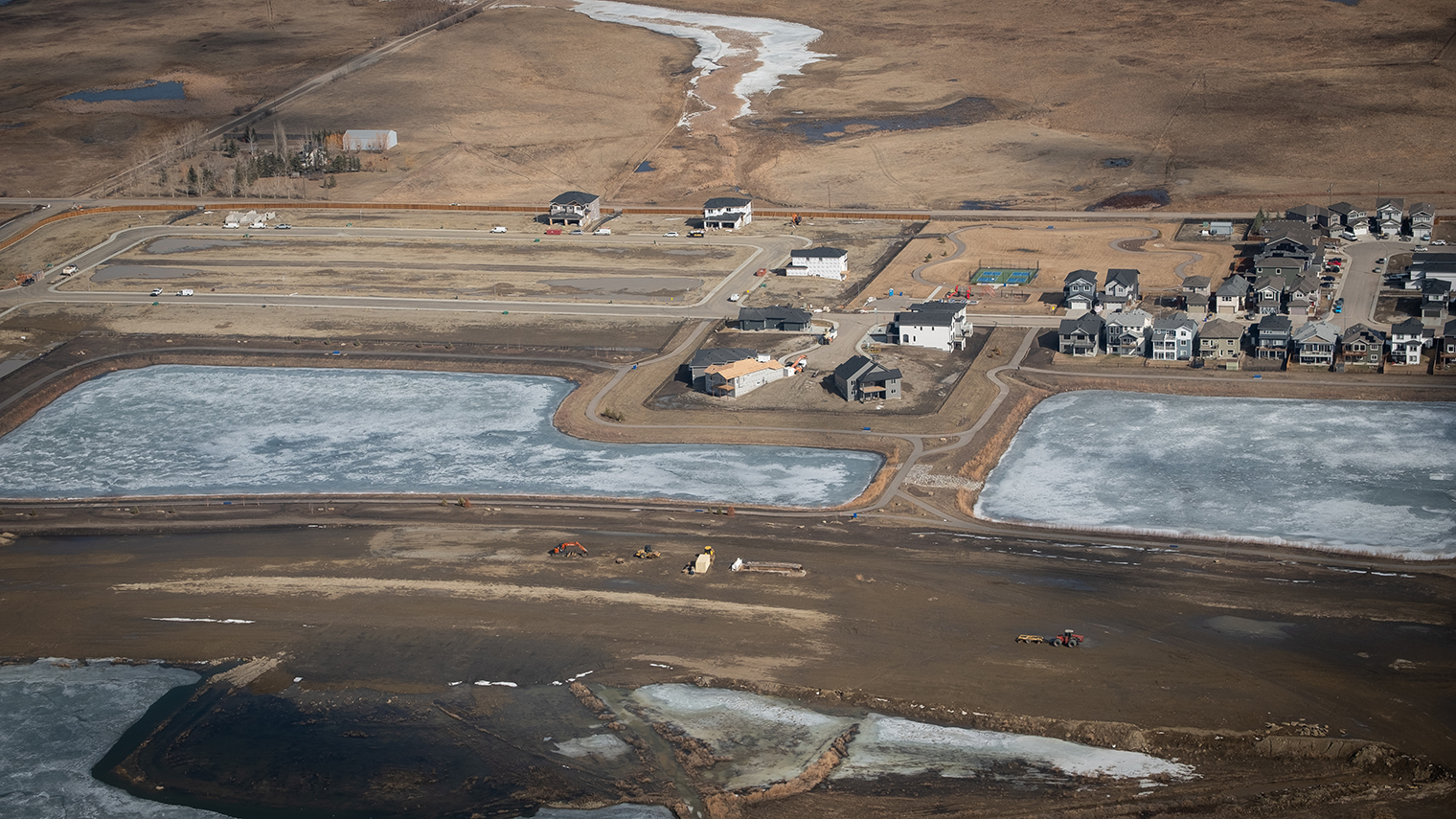
Lakewood has two storm ponds on site that together cover about 30 acres. Every storm sewer in the subdivision is engineered to drain to those ponds. The elevation of the water in those ponds sits well below any foundation in the community. During heavy rain, runoff from hard surfaces, roads, driveways, and rooftops hits catch basins, travels through the storm system, and collects in the ponds. From there, it's released in a controlled way according to how the system was designed.
Matt said it directly: flooding is essentially impossible as long as the system works as designed. And in a subdivision this engineered, that's the expectation.
What About the Canal?
Lakewood sits adjacent to an irrigation canal owned by the WID (Western Irrigation District). Canals can leak; that's a known reality. So the engineers designed a collection trench specifically to capture that seepage before it can affect the subdivision. It's an example of the proactive problem-solving that goes into a development like this long before anyone moves in.
What Happens When We Build Your Home?
Even after all of Bernie's grading and Matt's deep services, there's still another layer of protection when we dig for your foundation. We conduct soil bearing tests on the excavation and take soil samples. If anything needs to be addressed, we fix it then.
In all the homes we've built at Lakewood, we've never had a soil bearing test fail. Not once.
And if you drive through Phase 1 today, the lots that have been occupied since 2016 and 2017, nothing is falling over. The roads are good. The homes are solid. The process works.
One Thing Every Homeowner Should Know
With all that said, there is one thing you can do to protect your own home: keep your downspouts down and extended away from your foundation, and make sure your lot is graded away from the house.
The most common cause of water in basements across any subdivision, not just Lakewood, is improper drainage at the home level. The subdivision infrastructure can do its job perfectly, but if water is pooling against your foundation because a downspout isn't directing it away, that becomes your problem. It's a simple thing to stay on top of.
The Bottom Line
Lakewood is not built on a swamp. It's built on engineered, compacted, tested ground, with a drainage system, a storm pond network, a canal interception trench, and layers of independent testing that most people never think about.
I brought Bernie and Matt onto camera because the most credible voice on what's in the ground isn't mine, it's theirs. They deal with it every day. And their answer, from decades of experience across every major community in this region, is that Lakewood is no different from any other well-built subdivision.
If you have questions about building at Lakewood, come see us at our showhome at: 43 Lakewood Point, every Saturday and Sunday from 12-5 pm.
Full video with Matt and Bernie: